


Seven New Innovation Projects to Drive Earlier and Faster Cancer Diagnosis
Across SWAG Cancer Alliance, we are proud to announce the launch of seven new innovation projects funded through our Cancer Innovation Programme, run in partnership with Health Innovation West of England. These projects, selected through a competitive open call, are designed to accelerate earlier and faster cancer diagnosis across our region, with a strong focus on cutting-edge technologies and addressing health inequalities.
This funding initiative is a key part of our commitment to building a culture of innovation across the cancer care pathway. It supports the ambitions laid out in the NHS 10-year Health Plan which focuses on shifting care from analogue to digital and from hospital to community.
Why This Funding Call Was Launched
The open call, which ran from September 2024 to February 2025, invited applications from across the healthcare system, including primary and secondary care, voluntary, community, and social enterprise organisations, and innovators. The focus was on later-stage innovations with proven impact, ready for adoption or spread within the SWAG region. Priority was given to projects targeting tumour sites with high rates of late-stage diagnosis, such as oesophageal, lung, pancreatic, and non-Hodgkin’s lymphoma, and those addressing health inequalities in underserved populations.
The Seven Funded Projects
EndoSign Capsule Sponge (Cyted Health)
A primary care-based tool, used alongside targeted case finding, for Barrett’s Oesophagus, a precursor to oesophageal cancer, using a minimally invasive capsule sponge test.
What it means for patients: This test is quick, simple, and can be done in a local surgery, making it easier to diagnose Barrett’s Oesophagus in primary care, without needing a hospital referral.
GALEAS Bladder Cancer Urine Test (Nonacus)
A non-invasive, at-home urine test for patients with non-visible haematuria, aiming to reduce reliance on cystoscopy and improve patient experience.
What it means for patients: This test could reduce the need for uncomfortable procedures like cystoscopy, save time, and make the process less stressful, while helping doctors spot potential signs of cancer earlier.
 Prostate MRI AI Tool (Royal United Hospitals Bath NHS Foundation Trust)
An AI-driven MRI analysis tool to standardise and enhance prostate cancer detection, reducing variability and supporting clinical decision-making.
What it means for patients: Men being tested for prostate cancer could get quicker, more reliable results, reducing anxiety and helping ensure the right treatment is started sooner.
GI Genius™ Intelligent Endoscopy (Gloucestershire Hospitals NHS Foundation Trust)
AI-assisted endoscopy to support trainee and newly qualified endoscopists maximise accuracy and early disease detection during colonoscopy, including colorectal cancer.
What it means for patients: This tool helps to detect pre-cancerous disease and colorectal (bowel) cancer earlier, and it enables newer or less experienced endoscopists to undertake the procedure with greater accuracy, leading to faster diagnosis and better outcomes.
Pi – Lucida Medical Prostate AI Tool (Gloucestershire Hospitals NHS Foundation Trust)
Already in use in Somerset, this AI tool will now be deployed in Gloucestershire to further standardise prostate cancer diagnostics.
What it means for patients: The tool helps ensure that all patients receive the same high-quality scan interpretation, no matter where they are seen, reducing delays and uncertainty.
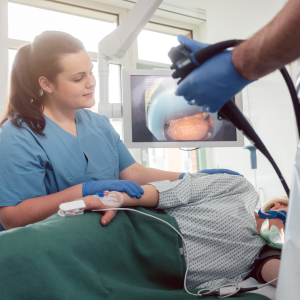 CHiP® Lite Boxes (SurgEase)
Real-time video support for endoscopy teams across SWAG, enabling remote expert input during procedures and enhancing training and diagnostic accuracy in upper and lower GI cancers.
What it means for patients: Remote expert support means better care during complex procedures, fewer unnecessary treatments, and more accurate diagnosis, especially in smaller or rural hospitals.
ColoMax Analysis (Certus Technology)
A system-wide analysis to optimise the colorectal cancer referral pathway, supporting the future rollout of non-invasive diagnostic tools like COLOFIT, and preparing for the national bowel cancer screening programme altering the referral threshold.
What it means for patients: This work will help ensure people are directed to the right test more quickly, reducing waiting times and making the system more efficient for everyone.
Each project will run for 12–18 months, with independent evaluations planned for six of the seven initiatives. The exception is the ColoMax analysis, which is preparatory work for future implementation.
Cancer Innovation Programme Manager for SWAG Cancer Alliance and Health Innovation West of England Becky Clack said:
“These projects represent a really exciting step forward in our journey to improving early diagnosis and treatment of cancer. They demonstrate the commitment and the power of collaboration in striving to improve outcomes for patients across our region and we’re hopeful that their evaluation will show real potential to make a meaningful difference.”
What’s Next?
Over the coming months, we’ll be spotlighting each of these projects in more detail – sharing insights from the teams leading them, and how they’re helping to transform cancer diagnosis in our region. These stories will highlight the real-world impact of innovation across our health and care system.
