


Case finding in primary care involves the proactive identification of individuals who may be at increased risk of cancer, or diseases that can lead to cancer. Unlike screening, case finding is triggered during routine consultations, reviews of patient records, or through the use of risk assessment tools.
Primary care professionals play a critical role in this process. By recognising red flag symptoms, understanding patient history and using decision support tools such as risk calculators and NICE guidelines, they can initiate more timely investigations or referrals for prevention or earlier diagnosis of diseases.
This is particularly important for cancers that lack formal screening pathways and may often present late-stage symptoms, such as pancreatic or ovarian cancer. Effective case finding can lead to earlier diagnosis, improved survival rates and better patient outcomes. It also supports our aims to reduce emergency presentations and late-stage diagnoses which are often more complex or unable to treat.
Primary Care Case Finding Pilot
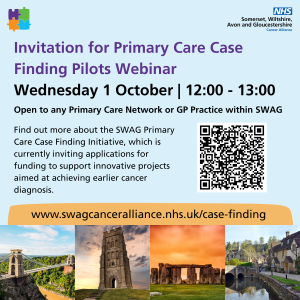 A core aim of SWAG Cancer Alliance is to increase the number of early cancer diagnoses each year. We recognise that our local primary care networks and GP practices are best placed to run local pilots to support this, yet they often lack the additional funds needed to do so.
Therefore, we have developed a funding call for PCNs or GPs to propose case finding projects which could result in earlier diagnosis of cancer.
Some suggestions of potential case findings have been recurrent UTIs for bladder cancer, lynch patients for bowel cancer, black men with higher risk for prostate cancer, etc.
We are holding an online webinar on Wednesday 1 October from 12:00 - 13:00 for anyone who wishes to get more information on the application process or the funding available. Register here.
National Pancreatic Case Finding Pilot

Somerset, Wiltshire, Avon, and Gloucestershire (SWAG) Cancer Alliance have joined a national pilot, launching locally with GP practices to help detect pancreatic cancer earlier, when treatment is likely to be more effective. The pilot will run across two years across 23 GP practices within SWAG's footprint.
