

We are your local cancer alliance. We work to improve cancer care across Somerset, Wiltshire, Avon, and Gloucestershire.
Who We Are
Somerset, Wiltshire, Avon, and Gloucestershire (SWAG) Cancer Alliance are one of 21 cancer alliances in England, funded by NHS England's National Cancer Programme.
We bring together healthcare providers, commissioners, and patients to co-design and transform cancer services. Our focus is on early detection, timely diagnosis, and high-quality treatment and care.
By fostering collaboration across primary care (GPs, pharmacies) and secondary care (hospitals, specialist clinics), we empower our clinical leaders to use shared data, evidence-based practices, and innovative systems to drive improvement for cancer patients.
About us
 Where We Work
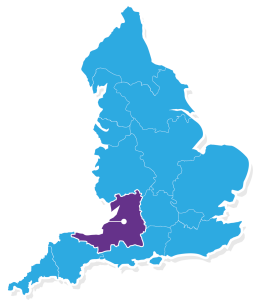
SWAG Cancer Alliance supports cancer care for around 3.2 million people across our region. We work across four Integrated Care Systems (ICSs) - local partnerships between the NHS, councils, and community organisations that aim to improve health and care services - including:
- Gloucestershire ICB - One Gloucestershire
- Bristol, North Somerset and South Gloucestershire (BNSSG) - Healthier Together
- Bath and North East Somerset, Swindon and Wiltshire (BSW) - BSW Together
- Somerset - Our Somerset
Together, these systems help us deliver more joined-up, consistent, and person-centered care.
Our work spans six main NHS Trusts, which provide diagnosis, treatment, and support across multiple hospital sites:
- Gloucestershire Hospitals NHS Foundation Trust
-
- Gloucestershire Royal Hospital
-
- Cheltenham General Hospital
- North Bristol NHS Trust
-
- Southmead Hospital
- University Hospitals Bristol & Weston NHS Foundation Trust
-
- Bristol Royal Infirmary
-
- Weston General Hospital
- Royal United Hospitals Bath NHS Foundation Trust
-
- Royal United Hospital Bath
- Salisbury NHS Foundation Trust
-
- Salisbury District Hospital
- Somerset NHS Foundation Trust
-
- Musgrove Park Hospital
-
- Yeovil District Hospital
We also work closely with hundreds of GP surgeries and primary care providers, where many people first raise concerns about symptoms. By connecting services across this network, we help ensure that cancer care is faster, fairer, and focused on what local people need most.
Our Priorities
Our work supports the NHS Long Term Plan for cancer, which sets out two core ambitious goals:
- by 2028, 75% of cancers should be diagnosed at Stage One or Two, and;
- 55,000 more people each year should survive at least five years after diagnosis.
We also seek to achieve the NHS national waiting time standards, which include:
- The 28-Day Faster Diagnosis Standard - people should have cancer either ruled out or diagnosed within 28 days of an urgent cancer referral.
- The 31-Day Standard - people with cancer should begin their treatment within 31 days of a decision to treat.
- The 62-Day Standard - people with cancer should begin treatment within 62 days of an urgent referral.
Earlier Diagnosis
- Improve uptake of cancer screening for bowel, breast, cervical and lung cancer.
- Raise awareness of signs and symptoms of cancer and encourage timely presentation to primary care (GPs).
- Improve primary care pathways for onward referrals and the diagnostic pathway.
- Implement innovative solutions to improve earlier diagnosis.
Faster Diagnosis
- Improve cancer waiting times from diagnosis to treatment.
- Support more consistent diagnostic timelines and performance across different tumour sites and providers.
- Implement more effective system planning to enable patients to receive treatment quicker.
Treatment and Care
- Reduce variation in treatment across different tumour sites.
- Trial and implement new innovative treatment methods to improve cancer outcomes and survival rates.
- Improve system efficiencies to enable more capacity for patient treatment.
- Bring treatment closer to home through day centres and community hubs.
Workforce
- Build a skilled and resilient workforce to deliver outstanding cancer care to patients.
- Provide education and training programmes within new cancer treatment and diagnostic pathways.
- Grow the workforce across SWAG and encourage new generations into a career in cancer care.
All of our work is underpinned by aiming to tackle and address health inequalities across the cancer care pathway, from early diagnosis right through to treatment.
Across SWAG we cover a diverse and rich community, from inner Bristol to rural Somerset. We are committed to hearing from our people on what matters most to them and implementing solutions to ensure that everyone, no matter their background or geography, has access to fair, equitable cancer care.
