


Liver Surveillance
Liver cancer is the fastest-rising cause of cancer-related deaths in the UK. The most common form of primary liver cancer is hepatocellular carcinoma (HCC), which makes up 85% of all liver cancers.
According to Cancer Research UK, around 6,200 people are diagnosed with liver cancer each year. Incidence of HCC has increased by 50% over the past decade and is expected to continue to rise. Existing evidence suggests that only around 20% of HCCs are currently diagnosed at an early stage (stages 1 or 2).
Research by the British Liver Trust suggests only 13% of people will survive 5 years or more following a liver cancer diagnosis, and only 40% will survive for 1 year or more.
Survival and patient outcomes from HCC are significantly improved when the cancer is diagnosed earlier. The biggest risk factor for HCC is pre-existing liver disease, with liver cirrhosis being present in 80-90% of people with HCC.
NICE guidance recommends that people at high risk of HCC receive 6-monthly liver surveillance, yet fewer than half of patients who should receive surveillance do.
On average, patients in regular ultrasound surveillance have their cancers detected earlier and receive more curative intent treatment. However, implementation needs to be improved.
The main risk factor for primary hepatocellular carcinoma (HCC) is cirrhosis (scarring) of the liver, which can often go undiagnosed for many years before symptoms develop. Many of us are at risk of cirrhosis due to alcohol misuse, type 2 diabetes, obesity, or viral hepatitis. Earlier diagnosis leads to better outcomes in hepatocellular cancer, so 6-monthly surveillance scans for HCC should be offered to cirrhosis patients. We hope that by improving earlier diagnosis of cirrhosis we will be able to support earlier diagnosis of HCC and better outcomes for our patients. It will also allow them to optimise their cirrhosis care and engage with their hepatology services.
Gary's Story
HCC Surveillance
Since 2023 we have been supporting our HCC surveillance services across our six providers to enable them to invite over 80% of patients with cirrhosis/advanced fibrosis to 6-monthly ultrasound surveillance and support over 60% of those invited to attend.
- Establish robust call/recall systems within each provider, where these do not already exist, to track and invite those eligible for liver surveillance.
- Ensure that all patients who qualify for 6-monthly liver ultrasound surveillance are included on liver surveillance registers.
- Implement national minimum standards to develop/optimise hepatocellular carcinomas (HCC) surveillance pathways locally.
- Support providers to enrol in the IQILS accreditation programme and are reporting against the HCC minimum standards.
- Ensure that each HCC surveillance provider has an identified pathway navigator/CNS/peer support worker to improve attendance to appointments.
- Work with the relevant ICB(s) and/or local CDC(s) to ensure sufficient ultrasound capacity is available to provide 6-monthly liver surveillance to people with cirrhosis/advanced fibrosis.
- Develop plans to transition the commissioning of HCC surveillance services to the relevant ICB(s) and consider how CDC capacity could be used to provide access to surveillance in the community, including as part of the CDC’s pathway implementation work.
- Mainstream service delivery through sustainable commissioning arrangements with ICBs from end of 2025/26.
Our funding has supported:
- robust call/recall systems within each provider to track and invite those eligible for liver surveillance.
- Additional navigator/CNS/peer roles to support surveillance delivery and attendance to ultrasound scans
- Additional ultrasound capacity
- IQILS subscription
We aim to:
- Identify more people at high risk of HCC (cirrhosis/advanced fibrosis/hepatitis B).
- Increase the number of patients invited to 6-monthly surveillance.
- Improve attendance rates for surveillance ultrasound scans.
Progress is measured through patient numbers across these categories.
Community Liver Health Checks - Alright My Liver?
The Bristol and Severn Hepatitis C ODN, in partnership with SWAG, have been selected for an NHS Cancer Programme pilot project aiming to achieve earlier detection of liver cirrhosis and liver cancer.
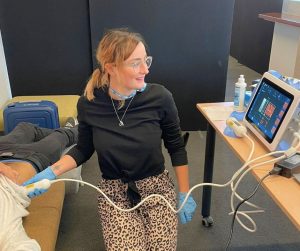
The team have developed an outreach programme called ‘Alright My Liver?’ which involves a specialist team offering screening for liver disease via a short risk factor assessment followed by capillary blood tests for viral hepatitis and/or a FibroScan. FibroScan is a quick, non-invasive bedside scan which can rule out or indicate liver cirrhosis. Service users with concerning results will be referred directly into hepatology services for clinical review and cancer surveillance. We have been fortunate to appoint a clinical nurse specialist to co-ordinate the service and hope soon to appoint a hepatology support worker who will be proactive in supporting our patients to overcome barriers to attending appointments.
 Whilst the ‘Alright My Liver?’ sessions are open to everyone, we are trying to get the service out to communities who most need it. We are working closely alongside addiction services in order to best engage people who might be at the highest risk of alcohol-related liver disease and viral hepatitis. We are collaborating with Caafi Health to improve our reach into ethically diverse communities in the region and support us in overcoming language barriers to engagement. We are also linking in with primary care services and diabetic medicine teams. There is a strong link between liver disease and deprivation, and we are committed to offering an inclusive and flexible service.
Sarah's Story
Get Involved/ Get in contact
If you would like to hear more about our project or suggest a collaboration, please get in touch with us at: AlrightMyLiver@ubhw.nhs.uk
or visit our website: www.UHBristol.nhs.uk/AlrightMyLiver
Signposting services
Liver Cancer UK: Support for you - Liver Cancer UK
British Liver Trust: Liver Health - British Liver Trust
NHS Liver Cancer: Treatment for liver cancer - NHS
NHS Cirrhosis: Cirrhosis - NHS
Cancer Research UK: Liver cancer | Cancer Research UK
Macmillan Cancer Support: Liver cancer (hepatocellular carcinoma HCC) | Macmillan Cancer Support
